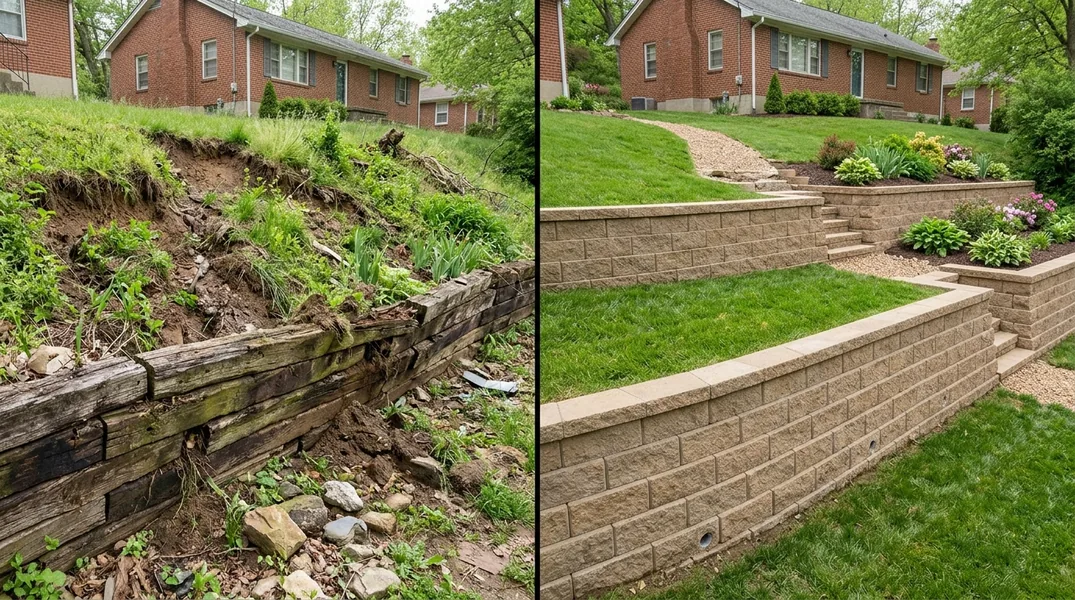
Why Spring Storms Are the Ultimate Test for Retaining Wall Drainage
Spring in Lexington brings a predictable pattern: weeks of steady rain, punctuated by intense thunderstorms that drop an inch or more in a single afternoon. For a retaining wall, this is not just a wet season. It is a stress test that exposes every weakness in the wall's drainage system. When water cannot escape, it builds up behind the wall and creates hydrostatic pressure, a force that pushes outward with tremendous weight. A wall that looked perfectly stable in dry weather can begin to lean, crack, or bulge after just a few days of heavy spring rain.
Most homeowners never think about what happens behind their retaining wall until something goes wrong. But the soil behind a wall is not just dirt. It is a sponge that fills with water during storms, and that water has to go somewhere. If the wall was built without proper drainage, or if the drainage system has clogged over time, the water has nowhere to go but against the wall. Understanding this process is the first step toward protecting your property and avoiding a costly failure.
How Hydrostatic Pressure Retaining Wall Failures Actually Happen
Hydrostatic pressure is the force exerted by water when it is trapped and cannot flow freely. Behind a retaining wall, saturated soil and standing water create a heavy, pushing force that the wall was never designed to resist on its own. Think of it like a balloon filled with water pressing against a thin sheet of plastic. The plastic might hold for a while, but eventually the pressure finds the weakest point and pushes through. In a retaining wall, that weakest point is usually a joint, a crack, or the base of the wall where it meets the footing.
The damage often starts subtly. You might notice a slight lean at the top of the wall, a horizontal crack running along the blocks, or soil settling in front of the wall. Over time, these small symptoms become serious structural problems. In Georgetown and across the Bluegrass region, the clay-heavy soils make this worse because clay drains slowly and holds water against the wall for days after a storm. Once hydrostatic pressure has caused movement, the wall will not correct itself. It needs professional attention, often including Retaining Wall Repair to stabilize the structure and correct the drainage that caused the problem.
The Role of a Retaining Wall French Drain in Preventing Spring Damage
The most effective defense against hydrostatic pressure is a properly designed retaining wall french drain. A French drain is a gravel-filled trench that runs along the back of the wall and contains a perforated pipe. Water seeps through the soil, enters the gravel, and flows into the pipe, which carries it away from the wall to a safe discharge point. When installed correctly, a French drain keeps the soil behind the wall from becoming saturated, which means hydrostatic pressure never has a chance to build up.
Unfortunately, many older walls in Nicholasville and the surrounding areas were built without any drainage at all, or with a drain that has since clogged with sediment and roots. If your wall has no visible drainage outlets, or if water pools at the base of the wall after rain, you likely have a drainage problem. A professional assessment can determine whether the existing drain can be cleaned and restored or whether the wall needs a new drainage system installed. In some cases, the smartest long-term solution is Retaining Wall Replacement with a modern drainage design built in from the start.
Warning Signs Your Wall Needs Retaining Wall Repair Near Me
Homeowners often ask us how to know when a wall needs professional help. The warning signs of drainage failure are usually visible if you know what to look for. A leaning wall, a bulging section, cracks that widen over time, soil washing out from around the base, or water pooling behind the wall are all red flags. You may also notice efflorescence, a white powdery stain on concrete or block walls, which indicates that water is moving through the wall and depositing minerals on the surface. Any of these symptoms should prompt a call to a professional before the next storm season makes things worse.
If you are searching for retaining wall repair near me in Lexington, look for a contractor who specializes in drainage as well as structural repair. Fixing a crack without addressing the water behind the wall is a temporary patch that will fail again. A proper repair includes evaluating the drainage, correcting the water flow, and reinforcing the wall structure. Concrete Retaining Walls are particularly susceptible to hydrostatic pressure because concrete is rigid and cannot flex, so cracks form when the pressure becomes too great. A drainage-focused repair protects both the wall and your investment.
Protecting Your Wall Before the Next Storm: What Lexington Homeowners Can Do
The best time to address retaining wall drainage is before the spring storms arrive. A simple inspection now can save you thousands in repairs later. Check for the warning signs mentioned above, clear any debris from drainage outlets, and make sure downspouts and surface water are directed away from the wall. If your wall is more than ten years old or was built before modern drainage standards, it is worth having a professional evaluate it. Retaining Wall Installation standards have improved significantly, and a properly built wall today includes drainage that older walls simply do not have.
At Lexington Retaining Wall, we help homeowners across the region protect their walls from water damage with drainage assessments, repairs, and new installations designed for Kentucky's wet spring weather. If you are concerned about your wall, call us at (859) 710-8778 or request a free estimate. We will inspect your wall, explain what is happening behind it, and recommend the most cost-effective solution. You can also review our pricing to understand typical project ranges before you call. Do not wait for the next storm to find out whether your wall can handle the pressure.
Looking for a professional retaining wall contractor in Lexington? Lexington Retaining Wall responds fast for all your retaining wall needs.
Get a Free QuoteOur services: Retaining Wall Installation · Retaining Wall Repair · Retaining Wall Replacement